
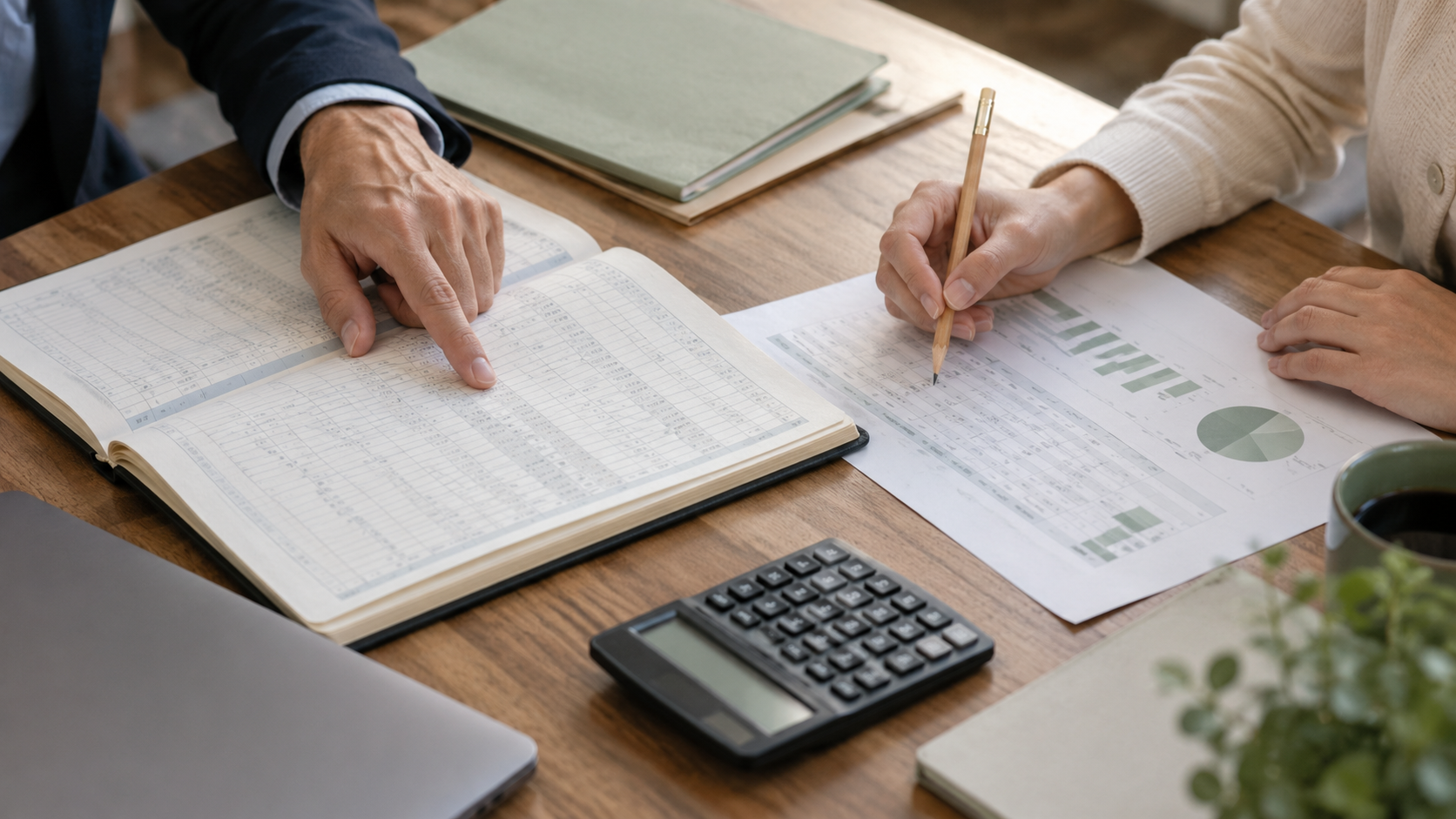
Bookkeepers and CPAs both work with financial information, so it is understandable that business owners sometimes assume they perform the same role.
They generally don't.
Although there can be overlap depending on the professionals involved, a bookkeeper typically focuses on maintaining the company's ongoing financial records, while a CPA may provide tax, accounting, assurance, and advisory services.
For many small businesses, the two roles work best together.
What Does a Bookkeeper Do?
A bookkeeper generally focuses on the day-to-day and month-to-month financial records of the business.
That can include recording and categorizing transactions, reconciling bank and credit card accounts, maintaining the general ledger, supporting accounts payable and receivable, and preparing financial statements.
The bookkeeper helps keep the financial records current throughout the year.
What Does a CPA Do?
A Certified Public Accountant is a licensed accounting professional.
Depending on the CPA and firm, services may include tax preparation, tax planning, financial reporting, audits or other assurance work, business consulting, and additional accounting services.
Many small-business owners interact most frequently with their CPA around tax season, although some CPAs provide ongoing advisory services throughout the year.
What's the Main Difference?
A useful way to think about it is:
Your bookkeeper helps maintain the financial information.
Your CPA may use that financial information to provide tax, accounting, or advisory services.
There can certainly be overlap. Some CPA firms provide bookkeeping, and some bookkeepers provide services beyond basic transaction recording.
But the functions are still different.
If I Already Have a CPA, Do I Need a Bookkeeper?
Possibly.
Having a CPA doesn't necessarily mean someone is maintaining your accounting records every month.
If your CPA prepares your tax return once a year but no one is reconciling accounts, reviewing transactions, and maintaining your books throughout the year, there may still be a need for a bookkeeper.
Can a Bookkeeper Replace My CPA?
Bookkeeping is generally not a replacement for tax advice or other professional services that may require a CPA or another qualified professional.
Instead, a bookkeeper can help make the CPA's job easier by maintaining accurate and organized records.
Why Bookkeepers and CPAs Work Well Together
Consider what happens when the books are maintained consistently throughout the year.
Accounts are reconciled.
Transactions are categorized.
Questions are addressed while the activity is still recent.
Financial reports are kept current.
When year-end arrives, the CPA receives a much stronger starting point.
That can make the tax and year-end process more efficient for the business owner, bookkeeper, and CPA.
Which One Does Your Business Need?
For many businesses, the answer isn't necessarily bookkeeper or CPA.
It can be bookkeeper and CPA.
Each professional plays a different role in keeping the financial side of the business organized.